The honest answer
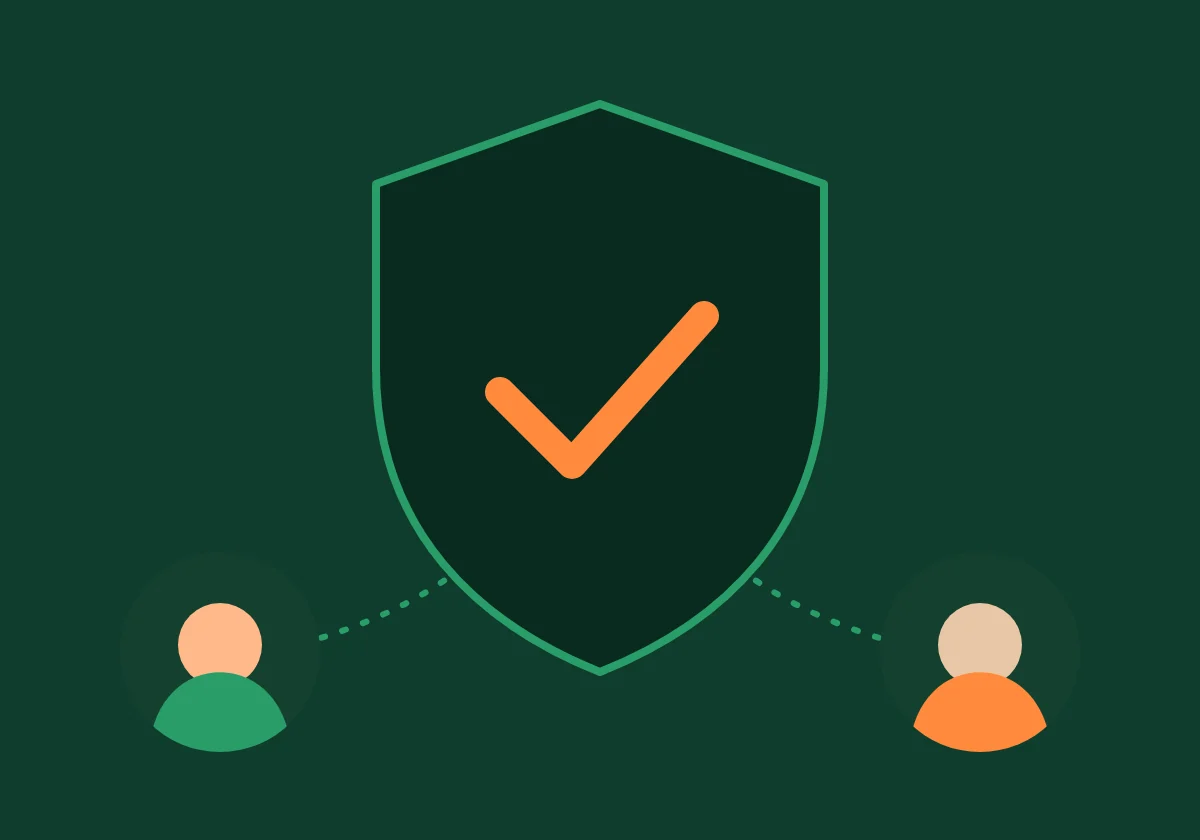
Random video chat is as safe as you keep it. The large majority of users are ordinary people looking for a conversation. The risk comes from a small number of scammers and bad actors who go wherever strangers meet. You cannot control who you are matched with, but you can control what you share and how fast you leave.
That is true on every service of this kind, whether you use Monko, OmeTV or the Monkey app, and it was true on Omegle before it closed. No platform can promise what the next match will be.
The main risks to know about
Sextortion. This is the serious one. Someone persuades you to do something sexual on camera, secretly records it, and then threatens to send it to your family or employer unless you pay. It is blackmail, and it is common: the FBI's Internet Crime Complaint Center received more than 75,000 sextortion reports in 2025, and more than 19,000 of them involved people aged 40 or over. It does not only happen to teenagers.
Money scams. Some people are not after images at all. They build a quick rapport and then need help: a gift card, a small loan, an investment tip that cannot wait. Any conversation that ends in a request for money was probably built to get there.
Recording. Anyone can record their own screen. A service not saving your video does not stop the person you are talking to from saving it.
Fake video. The face on screen is not always live. Looped clips have been used for years, and security researchers now warn about deepfake video as well. If someone avoids doing anything spontaneous, such as waving or saying a word you choose, be suspicious.
Red flags that should end a chat
- They steer the conversation to sexual territory within minutes.
- They ask for money, gift cards, crypto or codes, for any reason.
- They push you to move to Instagram, Telegram or WhatsApp straight away.
- Their camera is conveniently broken while yours has to stay on.
- They ask where you live, where you work or what your full name is.
- A steady run of excuses that all end with you sending something.
Any one of these is a reason to press Next. You never owe a stranger an explanation.
Before you start: a two-minute setup
- Look at what is behind you. Post on the wall, a window with a recognisable view, a work badge or a school jumper can all identify you.
- Close anything on screen that shows your name, email or messages, in case you share your screen by accident.
- Use the browser's permission prompt deliberately. Allow the camera for this site only, and remove the permission afterwards if you will not be back.
- Decide in advance what you will not talk about: your address, your employer, your accounts.
- Keep a cover on your webcam when you are not using it. A sticky note does the job.
Five habits during a chat
- Stay anonymous: no full name, address, school, workplace or social handles.
- Never send money or intimate images to someone you have just met.
- Let the conversation lead, not the camera. You learn more from how someone talks than from a few seconds of video.
- Assume it could be recorded, and act accordingly.
- Use Next freely and report anything serious. Leaving is always allowed.
What the platform does, and what it cannot do
It helps to know where the limits are. On Monko, the video chat is provided by FTF Live. It says it screens connections automatically, has a team that reviews reports, and may take low-resolution screenshots for moderation. Its rules ban nudity and sexual content and ask you to keep your face on camera.
Those measures reduce bad behaviour; they do not remove it. Video in a chat like this usually travels directly between the two browsers, so nobody is watching every call, and age is confirmed with a click, not an ID check. The same is true of most random-chat services. Treat moderation as a backstop, not a guarantee.
If the other person seems to be under 18
Adults-only rules do not stop minors from getting in, because age is confirmed with a click. If the person you are matched with looks or sounds under 18, end the chat immediately and report it. Do not keep talking to find out, and do not record anything.
If you see sexual content involving a child, that is a crime, not a rule-break. Report it to the platform and to the authorities. In the United States that means the National Center for Missing and Exploited Children's CyberTipline; elsewhere, your local police.
If someone threatens you
If someone threatens to share images or recordings of you, the advice from police and safety organisations is consistent:
- Do not pay. Paying rarely ends it. It shows you can be pressured, and the usual result is a demand for more.
- Stop replying. Do not negotiate or argue.
- Keep the evidence. Save usernames, messages and payment details. Do not delete the conversation before reporting it.
- Report it on the platform, and block the account.
- Report it to the police. In the United States, the FBI takes reports at ic3.gov or on 1-800-CALL-FBI. In the UK, call 101, or 999 if you are in immediate danger. Elsewhere, contact your local police.
- Get images blocked. If you are an adult, StopNCII.org can help stop intimate images being shared on participating platforms, free of charge.
Being targeted is not your fault. These schemes are run by organised criminals and rely on the victim feeling too ashamed to ask for help. Talking to someone you trust is usually the turning point.
One related scam is worth knowing: an email claiming someone has hacked your webcam and filmed you, with a demand for payment. Security researchers note that many of these claims are bluffs sent to thousands of people at once. Do not pay, and do not click anything in the message.
Random video chat is for adults only. If you are under 18, these platforms are not built for you, and no safety habit makes them appropriate.